
Pointillism Tattoos in Anlaby, Hull
Images built from thousands of single dots. Soft, grainy tone with no hard lines, worked entirely in black and grey.
Tone, one dot at a time
Pointillism, or dotwork, builds an image from density rather than line. Pack the dots close and you get shadow. Space them out and you get light. Up close it is texture. Step back and it resolves into a clear picture.
It is slow, methodical work, and that patience is exactly what gives it its soft, almost printed quality.
What dotwork relies on
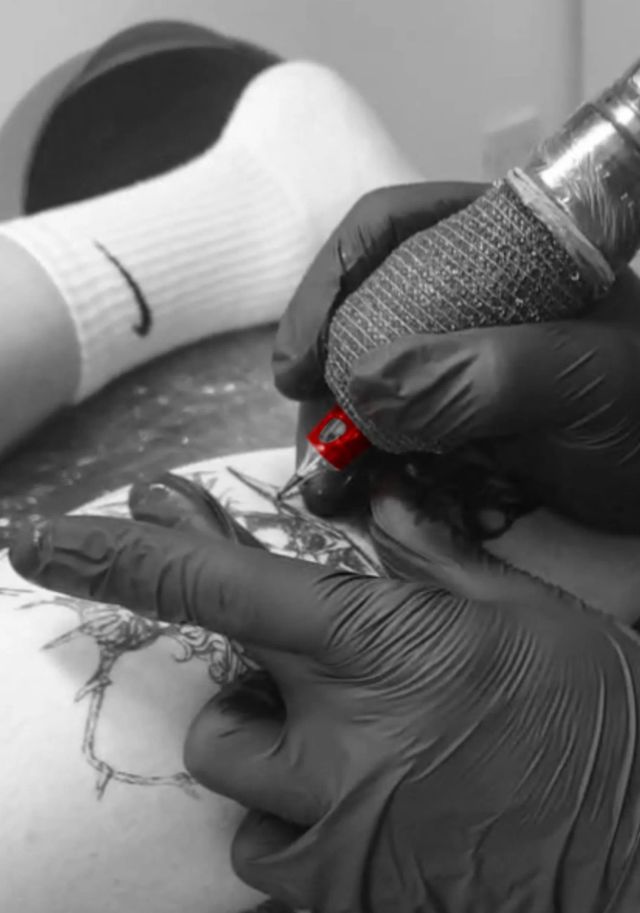
Good pointillism comes from control and consistency:
- Even dot size and spacing across the whole piece
- Smooth gradients from dense shadow to open light
- Restraint, letting the skin carry the highlights
- A subject that suits texture over crisp outline
How I work in dots
I plan the tonal map first, where the darks and lights fall, then build the shading dot by dot. There is no rushing it. The evenness is the whole point, so I pace the sittings to keep my hand steady and the spacing true.
Dotwork here is black and grey, with a single red only where a design genuinely asks for it.
Scale, time and healing
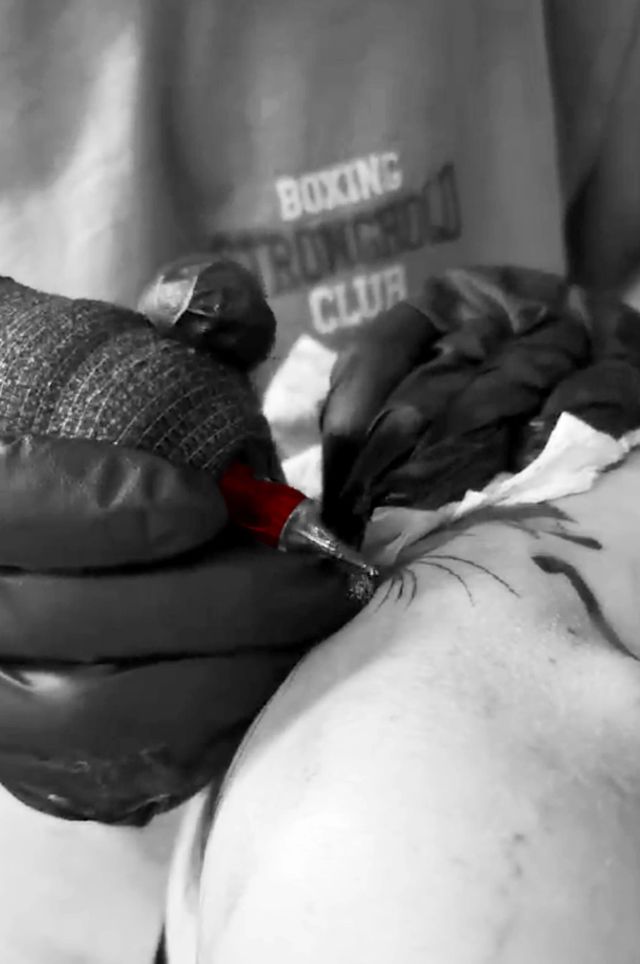
Dotwork suits medium to larger pieces on the forearm, upper arm, thigh and back, where the gradients have room to breathe. Detailed stippling is usually spread across more than one sitting.
It heals like any shading, gently and slowly. Follow the aftercare and keep it out of the sun while it settles.
Common questions
Why does pointillism take longer?
Does dotwork hold up over time?
Can you combine dotwork with line?
Discuss a dotwork piece
Send your idea and a rough size. I will tell you how it suits stippling and how many sittings to plan for.